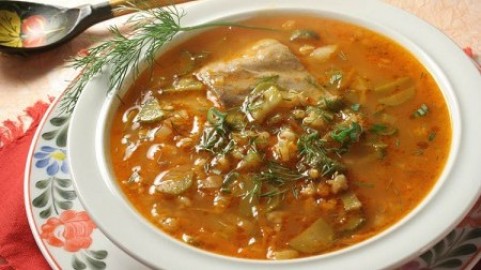
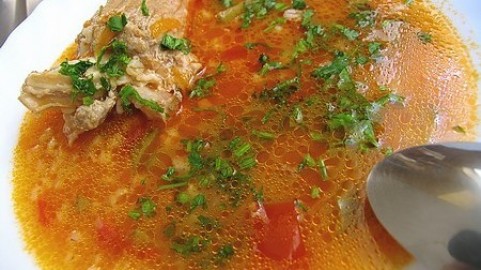
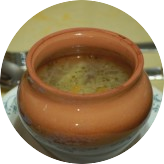
The rassolnik is a historically Russian main course that is why it is very common at Ukrainian table. It is made with pickled cucumbers and cucumber pickle.
Ingredients
Beef 500 g
Pearl barley 100 g
Potatoes 500 g
Pickled cucumber 200 g
Cucumber pickle 200 ml
Onions 150 g
Carrot 150 g
Bay leaf 1 pieces
Salt to taste
Ground black pepper to taste
Stages of cooking
1
Rinse and coarsely cut the meat, and then add the peeled onion, carrot, bay leaf and pepper beans. Cook for an hour.
2
Rinse the pearl barley with cold water. Add it to the stock and cook for 30 mins more.
3
Peel and dice the potatoes, then add them to the broth.
4
Chop the onion, finely grate the carrot, shred or dice the pickled cucumbers. Braise the cucumbers a little adding some broth. Add the cucumber pickle to the soup.
5
Fry the onion in vegetable oil, then add the carrot, and continue frying. Add the cucumbers, onion and carrot in soup. Add the bay leaf, salt and pepper to taste. Cool for a further 10 mins, set aside from heat.
6
The rassolnik is served with sour cream and herbs.
Discover the secrets of traditional Ukrainian cuisine
Install our unique App and inspire yourself with the most delicious Ukrainian recipes!
Traditionally, sauerkraut is made with cabbage and carrot, which grant the dish with light flavor and milky colour, as it doesn’t have any coloring pigment. However, there is a plenty of sauerkraut recipes, including sauerkraut with beetroot, in particular. Such a combination boasts slightly exotic taste, as well as a bright scarlet colour. Moreove
Kapustnyak is a soup from sauerkraut that is very popular not only in Ukraine, but in many other countries of the world. It is a very rich, tasty and, in addition, healthy dish. It is a direct rival of famous Ukrainian borsht.
Kapustnyak's main ingredient is sauerkraut. If it's too sour, it should be washed with cold water. Besides sauerkraut, meat