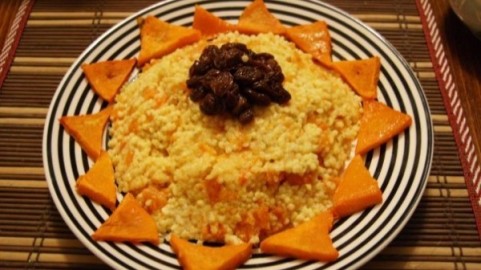
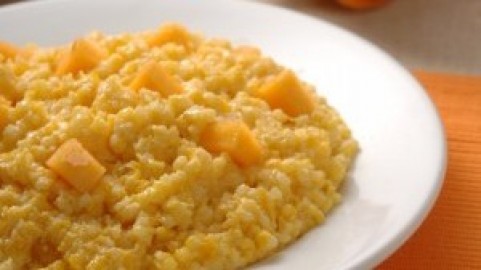
The pumpkin is a very beneficial product that is consumed almost all year long in Ukraine. The age-old Ukrainian pumpkin porridge is made with cereals; however the modern cookers use rice instead. Another contemporary complements to the porridge are raisins, dried pears, apricots and other dried fruits.
Ingredients
Pumpkin 1 kg
Millet 200 g
Milk 3 glass
Dairy butter 2 tbsp
Salt to taste
Ground black pepper to taste
Sugar to taste
Stages of cooking
1
Deseed, core and peel the pumpkin. Cut the pumpkin into 1x1 cm cubes.
2
Rinse the millet, remove strange items, and pour boiling water over the millet twice. Then let it sit in the boiling water for 5 mins. So the millet won’t be bitter and it will be cooked quicker.
3
Bring the milk to the boil, put the pumpkin pieces into the milk, add the salt, sugar and bring back to the boil.
4
Add the millet to the milk. Bring to the boil, and then cook for 20-30 mins over low heat until cooked through.
5
Stir, serve dressed with nuts, raisins and fresh apple’s slices.
Discover the secrets of traditional Ukrainian cuisine
Install our unique App and inspire yourself with the most delicious Ukrainian recipes!
Tasty and fragrant borsht is the rich Ukrainian cuisine's trademark, in regard this original dish was described in literary works by Ukrainian and Russian classical writers for a reason. You won't find a housewife in Ukraine, who can't cook borsht, although it's not the simplest dish at all. It has plenty of components and complicated cooking techn
It’s is an unusual salad for smoked food’s lovers. The salad boasts a successful combination of the piquancy crispy pig’s ears and the freshness of cucumbers.
The pumpkin dishes are very common in traditional Ukrainian cuisine. In general, the pumpkin came from America, however the Ukrainians had caught the fancy of it therefore as of today it is one of the protagonists of Ukrainian fare.
The national dishes of pumpkin are multifaceted. It can be used to make thin pancakes, pies, cookies, porridge and p
The mezhivo is an authentic Ukrainian dish. Besides the vegetable one, there is the fruit mezhivo. It will better compliment the alcoholic beverage but it should be made beforehand.