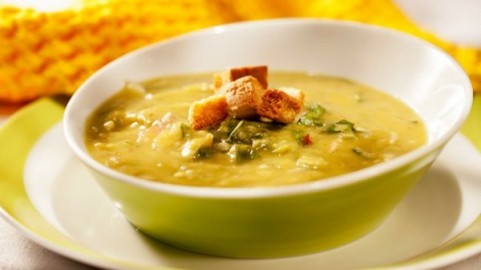
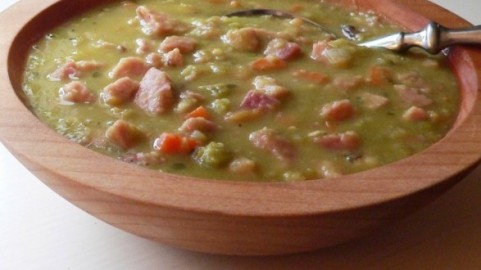
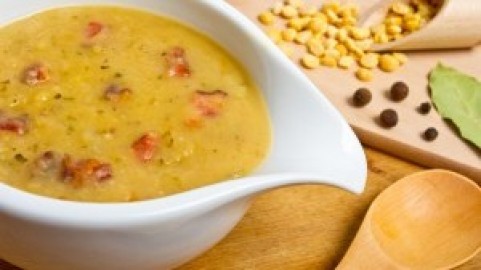
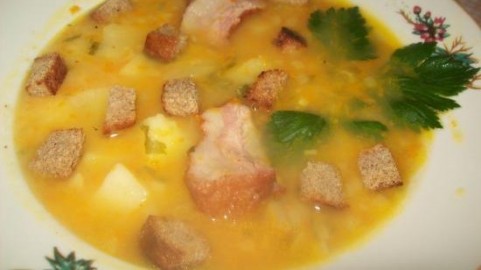
It is a mouth-watering and aromatic soup made from peas. This dish is delicious, pottage-like and rich. Many world cuisines have its own traditional pea soups – the Ukrainian one boasts the lean pea soup, or one made with smoked foods.
Ingredients
Split peas 1.5 glass
Ham or bacon 400 g
Onions 2 pieces
Carrot 1 pieces
Potatoes 3 pieces
Dairy butter 3 tbsp
Tomato paste 1 tbsp
Rusks 1 glass
Salt to taste
Ground black pepper to taste
Stages of cooking
1
Rinse the whole or middle peas in the deep bowl, pouring off the water several times.
2
Pre-soak the rinsed peas in 6 cups of hot water. The peas should swell. When the water is cooled, rinse the peas one more time.
3
Cover the soaked peas with 2-3 liters of cold water, bring to the boil, reduce the heat and cook for 40-60 mins.
4
Peel, rinse and chop the potatoes, add to the soften peas.
5
Peel and chop the onion and then brown in frying pan. Peel and coarsely grate the carrot; add to the onion.
6
Cut the ham and add to the onion with carrots, fry for a further 5 mins. Then add the tomato paste and braise for 3-4 mins more. Put the finished vegetables and ham to pea soup.
7
Cook soup for 10 mins more with all ingredients combined. Then set aside from heat and let it sit for 20-30 mins. Put it into plate and dress with croutons.
Discover the secrets of traditional Ukrainian cuisine
Install our unique App and inspire yourself with the most delicious Ukrainian recipes!
In Ukraine thick pancakes are traditionally served for breakfast. These are small puffy pancakes fried from both sides on the pan. They can be of different kinds: sweet, salted, with or without filling. Sweet thick pancakes with raspberries or apples are the regular choice for breakfast. Along with many other Ukrainian dishes, pancakes are served w
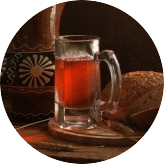
Kvass is a popular Slavic drink known since the Kievan Rus times. Made from rye or barley malt, it is not only very tasty, but refreshing and helpful for metabolic processes' normalization. Besides that, kvass is traditionally summer drink that perfectly slakes thirst and increases efficiency.
In order to make real kvass, you need minimum ingredie
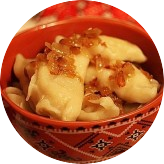
If you've read 'Evenings on a Farm near Dikanka' by Russian classical writer Nikolai Gogol, you surely remember how adroitly one of the characters ate vareniki with sour cream that flew into his mouth by themselves. Of course, traditional Ukrainian vareniki don't have such super skills, but their taste is sure to make you think of the Ukrainian cui
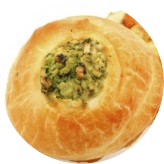
The knyshi are mouth-watering and aromatic stuffed buns, very popular through Western Ukraine. Their filling varies very much – they can be stuffed with cottage cheese or jam, browned onion or cracklings... The bryndza, mashed potatoes, cheese or cabbage are used as filling in Hutsul cuisine.